Stephen Foster: Pioneering American Composer
(July 4, 1826 - January 13,
1864)
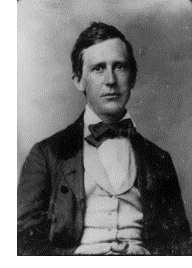 It would not be appropriate
to regard Stephen Foster as anything less than a great pioneer of American
music composition. He created in his lifetime
what would become some of the world’s most popular music for the next century
and a half to follow. If he had access to today’s copyright laws and publishing
network, Foster would be earning millions a year, but in his day he would only
see profits from the direct sales of his sheet music ( 5 – 10 cents a sheet )
or from the outright sale of a song to a publisher. Foster kept extensive
records of his business. His contracts, written out in his own hand are
examples of the earliest ones known to exist between American music publishers
and individual songwriters. He died financially broke at the age of 37, but he
left behind a priceless legacy.
More than just a successful
songwriter, Stephen Foster had a purpose; to reform a style of entertainment that
had already taken a strong hold on American popular culture: the black-face
minstrel show. In his own words, he
wanted to "build up taste...among refined people by making words suitable
to their taste, instead of the trashy and really offensive words which belong
to some songs of that order.” Foster
also studied the different ethnic music and poetic styles prevalent among the
new immigrant populations of the United States as well. He wanted to write
music using images and a musical vocabulary that would be widely understood by
all groups. He sought to humanize the characters in his songs, to have them
care for one another, and to convey a sense that all people--regardless of
their ethnic identities or social and economic class--share the same longings and
needs for family and home.
Although he was exploited by
the entrepreneurs of his day, and modern public opinion is sometimes
misdirected against him out of politically correct ignorance, we must always
remember the spirit of Foster’s work, and forever marvel at the beauty and
elegance of his words and music.
For more details on the life
of Stephen Foster and his music, please visit the website for the Center For
American Music
http://www.library.pitt.edu/libraries/cam/cam.html
While Stephen Foster's songs were composed by his
hand, the inspiration and themes came from his experiences in life, and may
also have been based on songs and melodies he heard while growing up. Foster's
song Angelina Baker bears a similarity both in title and melody to the
fiddle tune Angeline The Baker, and it is difficult to say for certain
which actually existed first.
( fiddle tune / my version )
(Stephen Foster / choral
rendition)
I've seen my Angelina
In de spring time and de
fall,
I've seen her in de corn
field
And I've seen her at de ball;
And ebry time I met her
She was smiling like de sun,
But now I'm left to weep a
tear
Cayse Angelina's gone.
chorus:
Angelina Baker!
Angelina Baker's gone
She left me here to weep a
tear
And beat on de old jaw bone.